Dividend Tracker: Stock Market
- 4.5
- Rating
- 100.00K
- Installs
- Free
- Price
 Analysis by App-foxy
I approached Dividend Tracker: Stock Market as a finance app for one practical question: can it make dividend investing easier to follow without turning a portfolio into an unreadable spreadsheet? After spending time with its portfolio-focused approach, I found a tool that is most useful for people who want to monitor income, review stock information, and keep an eye on their investing routine from a phone. It is not a replacement for a broker, financial adviser, or careful research, but it can give dividend-focused investors a more organized view of what they already own or are considering.
The app is developed by DivTracker LLC and is available as a free download for Everyone. Its audience is fairly clear from the short description: dividend tracking rather than general-purpose banking or trading. The broader store summary also points toward passive-income planning, portfolio analysis, and stock charts. That combination makes sense for someone who wants to understand how holdings may contribute to future income instead of looking only at daily price movement.
Its public reception is encouraging without being a reason to switch off your judgment. The app has an average rating of 4.5 from around 2.6 thousand ratings, with 443 written reviews and over 100 thousand installs. I read those figures as evidence of a real user base and a product people generally find useful, not as proof that every portfolio will be represented perfectly or that every investor will enjoy the workflow.
You May Also Like

 Blood Strike: 2.5 Anniversary
Blood Strike’s Loadouts Turn Every Drop Into a Tactical Gamble
A close look at Blood Strike’s custom loadouts: how fast access to signature weapons reshapes its battle royale rhythm, rewards preparation, and narrows the gap between fights.

 Pandora - Music & Podcasts
Pandora’s Music Is Easy to Start, but Harder to Recover
Pandora’s strength is its low-effort path from a seed to a station. Its weak spot is how much confidence it asks you to place in connection, setup, and quiet recovery.

 8 Ball Pool
 Is Built on Rivalries, Rematches, and Routine
A close look at the rivalries, rematches, shared routines, and unanswered safety questions that turn a quick pool match into a persistent mobile community.

 Samsung Music
’s Quiet Strength Is Playing What You Already Own
Its reach comes less from spectacle than from dependable access to a personal library. That simplicity is both the app’s strongest retention engine and its ceiling.

 AccuWeather: Weather Radar
AccuWeather Review: A Quick, Clear Forecast for Everyday Decisions
For everyday plans, the best forecast is the one you can understand quickly. AccuWeather makes rain timing, radar, and local conditions easy to act on, with a few trade-offs.

 Hill Climb Racing
Why Hill Climb Racing Still Turns Crashes Into One More Run
A tiny car, a bumpy hill and one more upgrade: Hill Climb Racing keeps resurfacing because its simple chaos makes every near-miss feel personal.
More From Our News Desk



How the app builds trust around dividend tracking
Finance apps deserve a different kind of review from a game or a casual utility. The important question is not simply whether the interface looks polished. I want to know what I am being asked to enter, which decisions remain mine, and whether the app helps me inspect information rather than pushing me toward rushed choices. That is the standard I used here.
The first reassuring point is the app’s narrow purpose. A dedicated dividend tracker can be easier to understand than a large investing platform that mixes orders, news, banking, tax documents, and promotional material in one place. Here, the focus is on portfolio visibility and analysis. That narrower role reduces the temptation to treat the app as though it were the account where my money is held.
That distinction matters. I would use this app as a viewing and planning companion, while keeping actual transactions inside my regulated brokerage account. A tracker can help me notice patterns or prepare questions, but it should not become the sole source for deciding whether a company is suitable. Stock charts and dividend figures are useful context; they are not a complete risk assessment.
The developer name is visible as DivTracker LLC, and the product has been maintained beyond its initial release. The current version is 1.36.0, while the app first appeared on February 2, 2022. For me, that history is helpful because it suggests an established product rather than a brand-new experiment, although longevity alone does not answer every question about privacy or data handling.
The free entry point also makes the app easy to test without immediately committing money. At the same time, in-app purchases range from $0.99 to $99.99 per item. That is a wide span, so I would examine each upgrade screen carefully before confirming anything. The free label describes the download, not necessarily every advanced capability a regular user might want.
What I would check before entering portfolio information
My preferred setup is cautious. I would first open the app, inspect the main screens, and see how much can be explored without entering sensitive information. I would then read the privacy and account wording presented in the app or its store materials before adding holdings. This is especially important if the app offers more than manual tracking, because an investor should understand whether information is typed in, imported, synchronized, or shared with another service.
I would also avoid treating a portfolio tracker as a secure vault for unrelated financial records. There is no good reason to place brokerage passwords, bank credentials, tax identifiers, or private notes into a tool merely because it displays investment information. If an app asks for access beyond what I expect from a tracker, I stop and review the request instead of accepting it automatically.
This habit is useful even when the app feels trustworthy. A clean interface can make data entry feel harmless, but a portfolio still reveals financial interests, approximate wealth, and investing habits. I would keep the information limited to what improves the calculations and review any available account, export, deletion, or sign-out controls before relying on the app for long-term records.
Controls that matter more than attractive charts
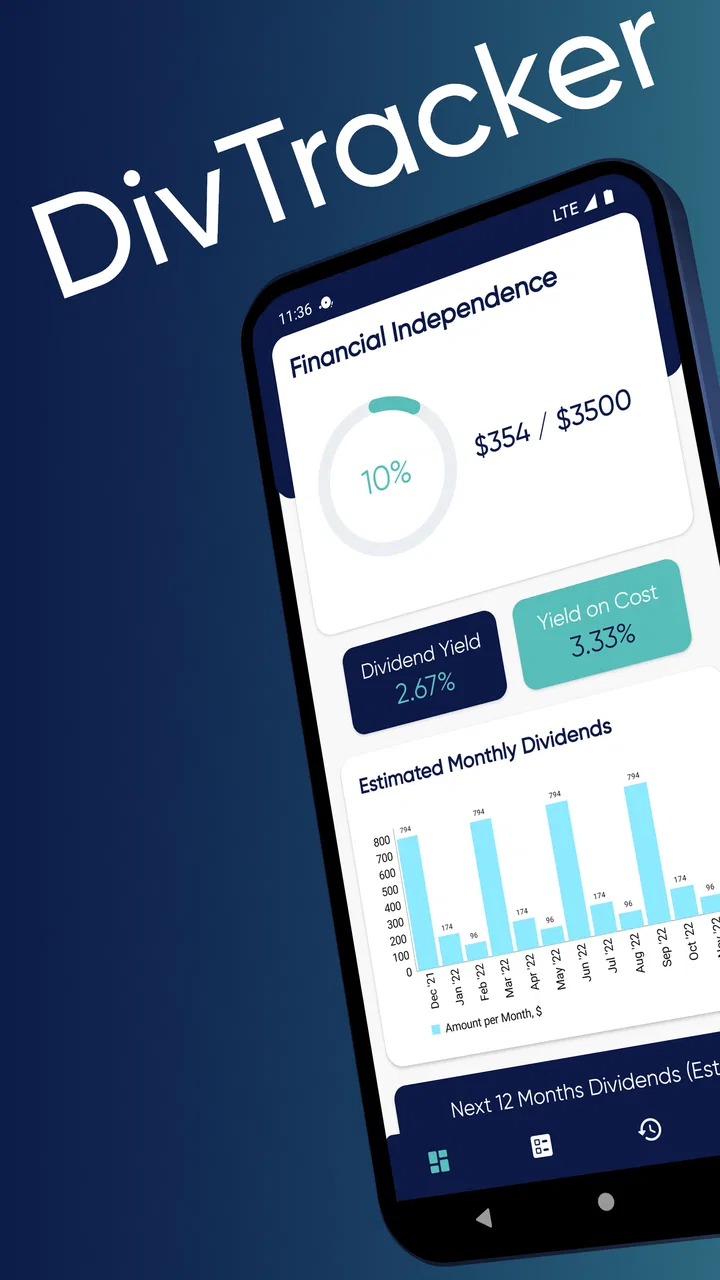
The strongest part of this kind of product is not the presence of a colorful chart by itself. It is the ability to connect a holding with the income it may produce and then inspect that information in a way that supports a repeatable review. I found the dividend-centered perspective more useful than a generic watchlist because it encourages me to ask how a position contributes to the portfolio’s purpose.
For example, I can imagine using the app after receiving a broker statement. I would compare the positions and dividend details, update the tracker, and then look at the portfolio as a whole rather than checking companies one at a time. That workflow can reveal concentration in a particular sector or an overreliance on a small number of dividend payers. The app does not make that decision for me, but organizing the information makes the question harder to ignore.
The stock charts add another layer. I would use them to place dividend income beside price behavior, not to predict the next move. A high distribution can look attractive when isolated, while a chart may remind me that price volatility and capital loss still matter. The useful insight is the tension between income and total return, not the idea that a chart can guarantee either one.
One practical tip is to create a fixed review routine instead of opening the app whenever the market moves. A monthly check can be calmer: compare expected income, inspect unusually large changes, and note which holdings deserve research elsewhere. Looking every few minutes can turn a planning tool into a source of unnecessary anxiety, especially for investors who are trying to build passive income over years.
Another worthwhile habit is to separate confirmed income from hopeful income. I would not count a projected dividend as spendable cash until the payment has actually been declared and received. If the app presents estimates or forecasts, I would treat them as planning figures and verify important dates and amounts through company announcements or my broker. That small distinction prevents a portfolio screen from creating a false sense of certainty.
Where privacy and data choices deserve attention
My trust in a finance app depends heavily on visible choices. I look for clear permission prompts, understandable explanations of why information is needed, and account controls that do not make leaving difficult. I also prefer when an app lets me decide whether to use manual entry or a connected workflow rather than assuming that automatic access is the only convenient option.
For this reason, I would review every permission request at the moment it appears, not just tap through setup. A dividend tracker should not receive broad device access without a clear reason. If a request seems unrelated to portfolio viewing, I would deny it and check whether the core experience still works. This is a simple way to preserve agency without abandoning the app altogether.
I would take the same approach to notifications. Dividend reminders can be useful when they help me remember a review or payment event, but constant market alerts can encourage impulsive behavior. I would enable only the notices that support my plan, then revisit them after a week. A finance app should fit my investing process rather than dictate how often I react.
Account controls are equally important. Before building a detailed history, I would look for ways to sign out, change account details, remove stored information, and understand what happens if I stop using the service. I would also keep an independent record of essential holdings. A tracker is convenient, but it should not be the only place where I know what I own or what income has arrived.
Those steps are not accusations against DivTracker LLC. They are sensible precautions for any product handling investment information. The app’s visible purpose supports cautious use, but responsible trust comes from checking the choices shown on my own device and limiting access to what I actually need.
A realistic everyday workflow
Imagine that I am paid at the end of the month and want to review my long-term investing plan before making another contribution. I open the app, inspect the portfolio view, and look at the expected dividend picture alongside the stock charts. I notice that one holding represents a larger share of the income than I remembered. Instead of buying more immediately, I write down a research task: check the company’s latest results, payout history, and valuation through reliable sources.
That is where the app earns its place. It turns a vague feeling—“my dividend portfolio is growing”—into a prompt for a more specific conversation with myself. Is the income diversified? Am I accepting too much company-specific risk? Is the portfolio designed for current cash flow or future growth? The tracker cannot answer those questions completely, but it can make them visible at the right time.
I would then compare the app’s figures with my brokerage statement and update anything that changed. This double-check is not glamorous, but it is one of the most important workflows. Corporate actions, reinvestments, withholding, and changes in declared payments can affect what I think I own. A tracker is only as useful as the information I maintain in it.
A second use case is screening ideas before they enter my portfolio. I might use the stock view and charts to create a short research list, but I would not treat the app as a substitute for reading filings or understanding a business. The advantage is organization: I can keep potential candidates separate from actual holdings and avoid confusing a watchlist idea with income I already receive.
Who will appreciate it, and who should skip it
I think this app suits a self-directed investor who already understands the basics of shares and dividends and wants a dedicated overview on a mobile device. It is particularly appealing if the standard brokerage interface buries income information under order screens, balances, and account menus. The focus on passive-income planning can make the portfolio feel more connected to a personal goal.
It may also help a beginner who is learning how dividend portfolios are organized, provided that beginner treats the displays as educational aids rather than recommendations. Seeing income, holdings, and charts together can encourage better questions. I would still pair it with trustworthy learning material, because a simple dividend number can hide payout risk, debt, weak growth, or an unsustainable business model.
I would skip it if I only want to place trades, transfer money, or manage a bank account. This is not the reason I would choose a dividend tracker. I would also look elsewhere if my main priority were advanced tax reporting, professional portfolio accounting, or a highly specialized asset mix. A broker, spreadsheet, or dedicated wealth-management platform may be better when those requirements come first.
There is also a trade-off for investors who dislike manual maintenance. The more control I keep over what is entered, the more responsibility I have to keep it accurate. If I expect every holding, payment, reinvestment, and corporate action to update itself without checking, disappointment is likely. Convenience matters, but accuracy matters more in a financial record.
How it compares with familiar alternatives
The usual alternative is the brokerage app. A broker is the authoritative place for orders, settled positions, cash, and official statements, so I would never replace it with this tracker. The advantage of the tracker is concentration: it can present dividend-oriented information without making me navigate through trading tools. The disadvantage is that it may require a separate maintenance routine and a second place to verify important details.
A spreadsheet offers the opposite balance. I can customize every column, calculate unusual scenarios, and keep the file offline or in a storage system I control. But building those formulas takes time, and a spreadsheet does not automatically provide the same focused stock-view experience. For someone who wants a ready-made dividend dashboard, the app is more approachable; for someone who enjoys modeling, the spreadsheet may remain superior.
General portfolio apps may be a better fit for investors holding funds, bonds, cash, and international assets alongside dividend stocks. Their broader coverage can matter more than a specialized income view. I would choose this app when dividend visibility is the main problem, not simply because it has a finance label.
There is a final comparison with doing nothing beyond reading broker statements. That approach is less convenient but can be perfectly adequate for a small, simple portfolio. If I own only a few positions and rarely need income analysis, adding another app may create more maintenance than value. The benefit becomes clearer as my holdings, goals, or review questions become harder to track mentally.
My cautious verdict after using it
The best reason to use this app is clarity, not prediction. It gives dividend-minded investors a focused place to think about portfolio income, stock context, and long-term organization. I like that its role can remain separate from actual trading, which encourages me to use it as a planning layer rather than handing it authority over financial decisions.
I would begin with the free version, inspect the available screens, and postpone any purchase until I know exactly which capability I need. Since optional items can cost from $0.99 to $99.99, I would read the purchase description and renewal terms carefully before paying. I would also test the workflow with limited information, compare important figures with my broker, and review permissions and account controls before creating a detailed record.
The app is free to download, rated for Everyone, and supports devices running Android 8.0 or later. Those requirements make it accessible to many phone users, while the current version shows that the product is still being updated. Still, accessibility should not be confused with simplicity: dividend investing itself requires research, patience, and an understanding of risk.
My recommendation is therefore specific. If you want a mobile companion dedicated to tracking dividend-oriented holdings and you are willing to verify figures and maintain your information, Dividend Tracker: Stock Market is worth trying. If you need trading, official records, complex tax work, or a fully customizable investment model, use your broker or another specialized tool instead. I would keep this app in the supporting role where it is strongest: helping me notice what my portfolio is doing, while leaving the final decisions—and the responsibility for checking them—with me.
FAQs for Dividend Tracker: Stock Market
01What is Dividend Tracker: Stock Market, and who is it designed for?
Dividend Tracker: Stock Market is a finance app designed to help users monitor dividend-paying stocks, organize investment holdings, and follow income from dividends in one place. It can be useful for beginners building a dividend portfolio as well as experienced investors who want a convenient overview of payments, yields, ex-dividend dates, and portfolio performance. It should be used as a tracking and research tool, not as personalized financial advice.
02Can I track my existing portfolio and dividend income with the app?
Yes, the app is intended to let users create or manage a portfolio by adding stocks and recording relevant holdings. Depending on the version and available features, information may be entered manually or synchronized through supported services. After setting up a portfolio, users can review estimated dividend income, payment schedules, yields, and other statistics. It is important to verify imported data because prices, corporate actions, and dividend estimates can change.
03Does Dividend Tracker: Stock Market provide real-time stock prices and dividend information?
The app may display market prices, dividend details, yield calculations, and upcoming payment dates, but the timing and accuracy of this information can depend on the data provider, exchange, subscription level, and internet connection. Some quotes may be delayed rather than truly real time. Investors should confirm important figures, dividend announcements, and ex-dividend dates with an official exchange, broker, or company filing before making a trade.
04Can the app predict future dividend payments or guarantee investment returns?
No. Dividend Tracker: Stock Market can help estimate future income using available dividend rates, payment histories, and portfolio information, but these calculations are not guarantees. Companies can reduce, suspend, or cancel dividends, while share prices and currency values can fluctuate significantly. The app does not remove investment risk, and users should research a company’s financial health and consider their own objectives before buying or selling securities.
05Is Dividend Tracker: Stock Market free to download, and are there in-app purchases?
The app may be available to download at no initial cost, although certain advanced tools, premium data, ad-free use, portfolio features, or analytics can require an in-app purchase or subscription. Pricing and included features may differ between Android and iOS and can change over time. Before subscribing, review the store listing, trial terms, renewal conditions, and cancellation instructions so there are no unexpected charges.
Pros
- Clean interface makes dividend data easy to scan.
- Supports portfolio tracking across multiple holdings.
- Dividend history helps identify payment patterns.
- Useful reminders can help users monitor upcoming payouts.
- Suitable for investors focused on income and long-term planning.
Cons
- Some advanced features may require a paid subscription.
- Data accuracy can depend on market-data provider updates.
- Limited value for users who do not invest in dividend stocks.
- Portfolio setup may take time for users with many positions.
- It is not a substitute for professional financial advice.

Dividend Tracker: Stock Market
Gallery